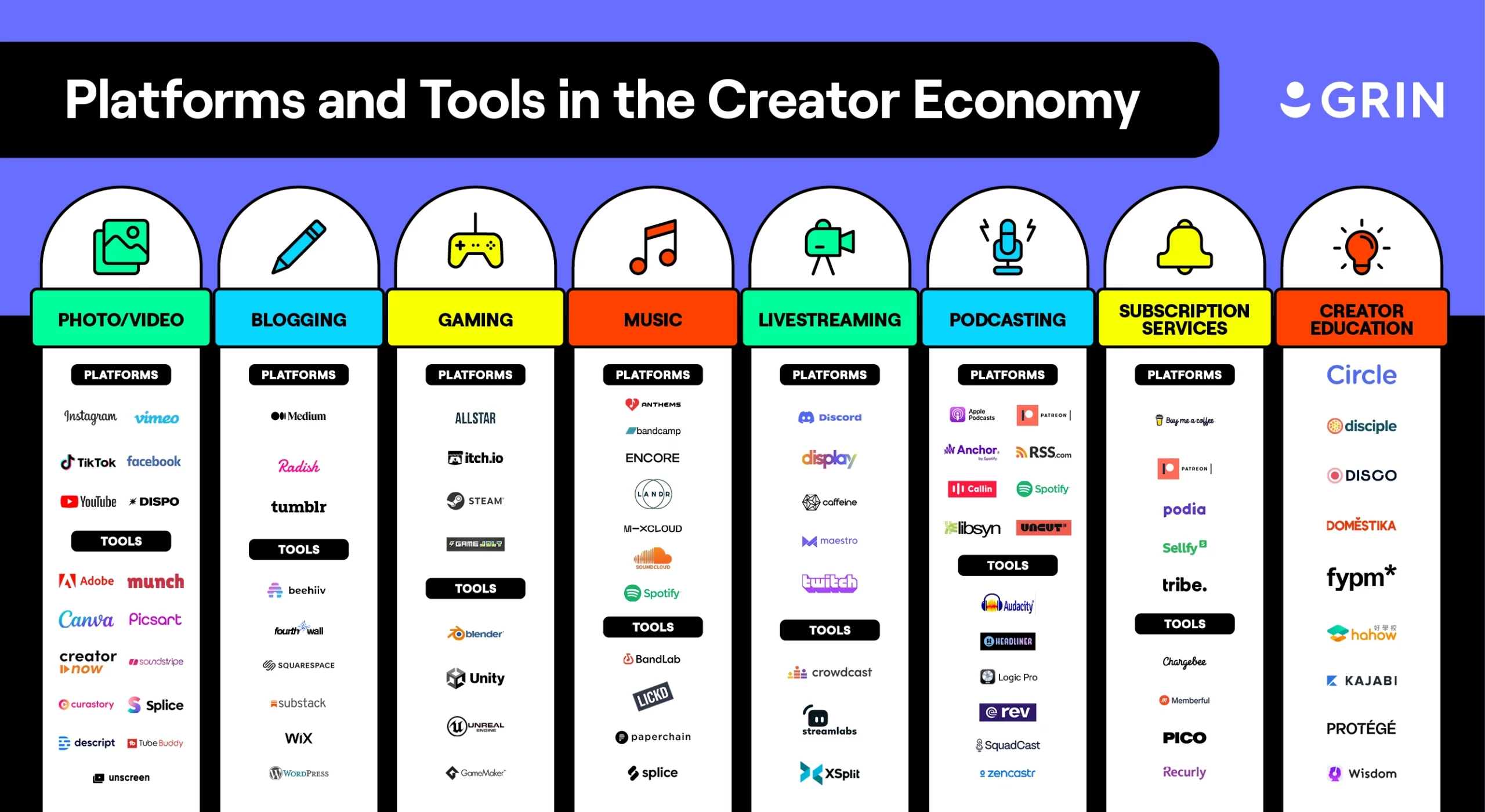
Over the last decade, the internet has built an incredible infrastructure for creators. The global creator economy market size was estimated at $205.25 billion in 2024, and is projected to reach over $1.3 trillion by 2033. If you want to sell a course, launch a newsletter, or monetise a YouTube channel, there are dozens of billion-dollar companies fighting to give you the tools to do it.
But there is a massive segment of the internet that has been completely ignored by this revolution: Community Leaders.
Creators vs. Connectors
The creator economy is built on a one-to-many model. The creator is the star, the audience is the consumer. The value flows in one direction: from the creator down to the audience, and the money flows back up.
Community leaders operate differently. They are connectors. They build many-to-many networks. The value in a community doesn't just come from the leader; it comes from the members interacting with each other.
"Creators monetise their attention. Community leaders monetise their network. But while creators have Shopify, Patreon, and Substack, community leaders are still duct-taping WhatsApp groups to spreadsheets."
The Monetisation Gap
Because the tools don't exist, community leaders are forced to adopt creator monetisation models that don't fit their reality. According to a 2026 Circle Trends Report, 88% of community builders monetise through paid memberships, while 53% sell courses and 51% offer coaching.
But these models are fundamentally flawed for community builders:
- Selling courses: Members often don't want to learn from you; they want to hire each other.
- Paid subscriptions: Charging a flat monthly fee artificially caps the size of your network, limiting the very network effects that make communities valuable.
- Sponsorships: Turning a trusted, intimate space into a billboard damages the core asset: trust.
None of these models capture the true value of a community: the peer-to-peer transactions happening between the members.
The Rise of the Community Broker
The next evolution of the internet economy isn't about creating more content. It's about facilitating better connections. We are moving from content-led commerce to community-led commerce.
Community leaders are perfectly positioned to become the brokers of the new economy. They have the trust, they have the audience, and they have the niche expertise. In fact, 86% of Fortune 500 brands using private communities report experiencing "deeper and richer insight into customer needs." Community leaders already possess this insight natively.
All they need is the infrastructure to capture a fraction of the economic activity they are already generating. When community leaders are empowered to act as brokers — taking a small commission on the deals that happen within their walls — they can finally build sustainable businesses without compromising the integrity of their communities.